*NEW POSTS EVERY FRIDAY*
@BellasKitchen1

This week, I headed to the British Library’s exhibition dedicated to the WW1 centenary, called ‘Enduring War: Grief, grit and humour’. As can be gathered from the name, this exhibition looks at the war from a personal perspective, exploring how individuals on both fronts coped with the horrors and uncertainties of war.
The exhibition opens with television stations where you can sit and listen to postcards and letters to loved ones being read from both fronts, which reveals emotions ranging from cheerfulness, positivity and hope to pure gloom.
As you walk through the entrance of the exhibition, you will see that it is divided into sections with each exploring, through the use of various objects donated to the exhibition, the mechanisms used by the British public to cope with war. It attempts to recreate the general mood of the British public at the time such as that of patriotism, and a sense of duty to make a contribution for the good of the country. In another section, it demonstrates how dark humour and political satire was used through various means such as cartoons, poetry and music. It was used to bond troops together, to boost morale and relieve boredom, and to make events of war seem less frightening. Towards the end of the exhibition, however, we are brought to the harsh facts of war: how deaths were recorded and memorialised.
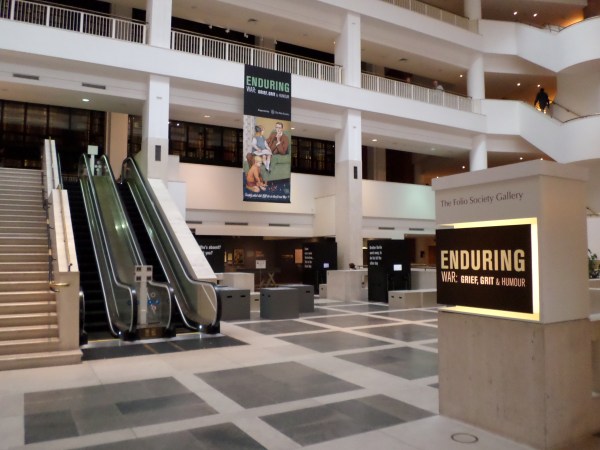
One thing was clear as I left the library though, which has inspired this post. It reveals the remarkable strength shown by many, including those who expressed pain and distress, during an unimaginably difficult time; a sense that, however tough things got, people just got on with it. The purpose of this blog is not only to celebrate British cooking, but also the great British spirit – the ‘stiff upper lip’ mentality that is so strongly associated with the UK. This old phrase refers to fortitude displayed in times of adversity, and there is no clearer demonstration of this attitude than that shown by Britons during this time in history and, in particular, their response to challenges thrown up by food shortages and rationing.
This brings me to another cook book I’ve been reading by May Bryon in the library, written in 1918 when rationing was first introduced. As I’ve pointed out before, after the outbreak of war, it quickly became clear that this was a war on a scale that had never been seen before. With this realisation came a huge amount of anxiety borne out of the political uncertainty and the obvious possibility of loss of loved ones at war, and May Byron acknowledges this in her opening pages as she writes about the effects of these emotional stresses on physical wellbeing, including digestion and appetite. Despite the no nonsense attitude adopted by many at the time, she is clearly highly sympathetic with other British housewives and the challenges they faced. Notwithstanding these troubles, she argues that there is no reason not to ‘rise to the occasion’ and press on with a ‘sense of cheerful enterprise’.
And it is this unfaltering positivity that inspires my next British classic: a hearty, warming casserole.
Bella’s Sausage Casserole with Dumplings
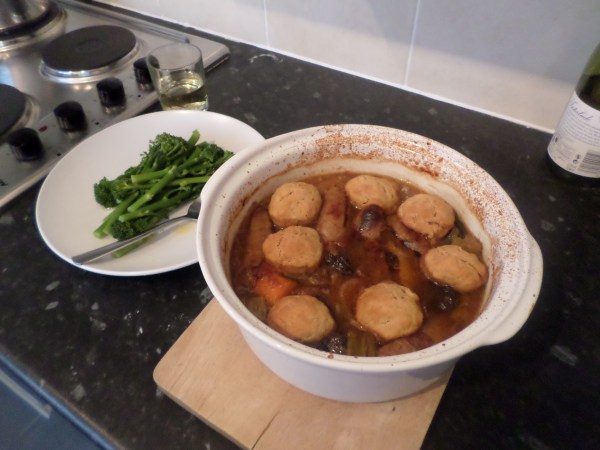
I got the following recipe from Jamie Oliver’s Food Tube – video here.
INGREDIENTS
6 sausages
2 onions
2 carrots
2 sticks of celery
3 medium sized tomatoes
450mls of vegetable stock
A splash of red wine
A handful of prunes
Atora for dumplings
Any choice of vegetables for a side

Preparing meals such as casseroles and stews is all about adding as much flavour as possible. This was particularly true in wartime Britain as one pot meals meant less waste and more flavour.
STEPS
1. Place the sausages in a frying pan, frying for 3-4 minutes on medium heat for both sides. This browns the meat which adds extra flavour to the dish
2. In your casserole pot, fry the chopped onions in butter until nice and soft.
3. Add the sliced tomatoes, carrots and celery.
4. Add the browned sausages.
5. Boil the kettle to make the vegetable stock and pour in. This will lift any of the good buttery stuff off the bottom of the pan.
6. Add the prunes and a bit of wine for flavouring
7. After simmering for a while, transfer to the oven at 150 degrees for 1 hour and 30 minutes.
8. About 30 minutes before the casserole is due to come out, start preparing the dumplings. Take the casserole out and place the dumplings on top, re-covering and putting back into the oven for the remaining 20 minutes.

9. Take this time to boil some vegetables
10. Take the casserole out to stand for 5-10 minutes before serving

 bella's kitchen