*NEW POSTS EVERY FRIDAY*
FOLLOW ME ON TWITTER FOR UPDATES @BellasKitchen1

I took one dreary October afternoon off this week to pop around the corner from the office to the British Museum, which is taking a bold and unique stance in recognising the centenary of the First World War.

This exhibition displays medals made by German artists who lived and worked in Germany during the First World War. Their work represents an early example of revealing the psychological horrors of war and its impact on civilian populations; in comparison few British medals were produced in connection with WW1. The British saw the work as the ‘perverted imagination’ of the Germans and to them at the time it would have been very provoking. ‘Despite this’, as the British Museum website says, ‘the British Museum was highly proactive in acquiring them, realising their significance as historical documents’. The medals document events of the conflict from a German perspective ranging from war in the air, on land, at sea, and in the home, to peace.
The below image is one example showcasing the effects of the food shortages resulting from the allied naval blockade on the German population. The medal depicts German bakers adding sawdust to flour to stretch out supplies of bread. It is inscribed ‘adulteration of flour’.
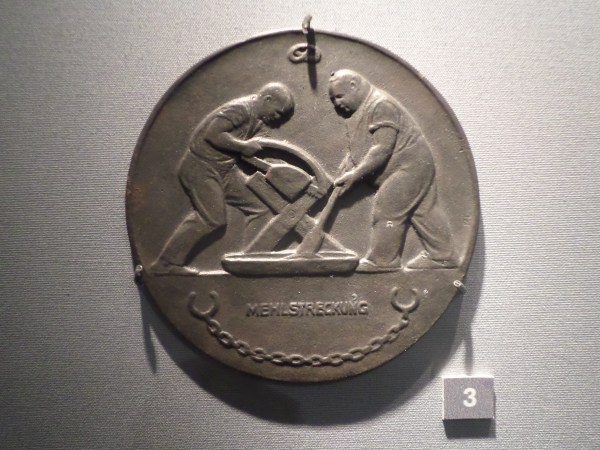
The British were known to bulk up bread where flour was in short supply with much more appetising and innocent ingredients…
Bella’s Homemade War Bread
In her rationing cook book, May Byron (who could be thought of as 1914’s Jamie Oliver) writes at length about bread, calling it ‘the most important article of all’. In fact, she says, to waste it would be a ‘culpable and criminal act’.
She encouraged housewives to make her ‘War Bread’ with GR flour (a less refined wheat flour) as it stayed fresh a week longer than the baker’s bread, which would go stale after only twelve hours. Families could therefore cut back on bread without their loaf going stale before they could finish it. ‘You wonder why the baker’s loaves should be called ‘bread’ by the side of yours’, she says, which would be healthier, taste better, and last longer.
If a loaf went stale too soon, housewives were encouraged to soak it in water for a minute or two and then place it in a hot oven to refresh it. Stale bread could also be reused in puddings (click here for post on this) or as breadcrumbs for other meals. If a loaf got too mouldy which, she says, ‘it cannot become if you exercise proper care’, you would wrap it in a paper bag and use it as fuel. Nothing would be wasted.

Potatoes would be used to bulk up a loaf and prevent it from going dry. ‘We are only, slowly and reluctantly, beginning to guess at the great usefulness of potatoes’ she writes, as they were used to make up many meals.
She sets out how to make it in great detail but assures the reader that it is simple (I’m not convinced). In fact, she says, it is so simple that she learnt to ‘sandwich’ it in between other various jobs of the day and recalls an account of author Harriet Beecher Stowe writing her book ‘Uncle Tom’s Cabin’, looking after her small baby, doing all the housework, and making the bread. Female multitasking at its finest.

INGREDIENTS
500g Allinson Country Grain Bread Flour
5 small potatoes mashed
7g yeast
1tsp salt
350ml warm water
1) In a large bowl, mix the flour, salt and yeast.
2) Stir in the water, mix and work into a dough by hand.
3) Add in the mashed potatoes warm.
4) Turn onto floured surface and knead.
5) Shape and put in greased flat pan or bread tin.

6) Cover with clean, damp towel and leave in a warm place to rise for about an hour.
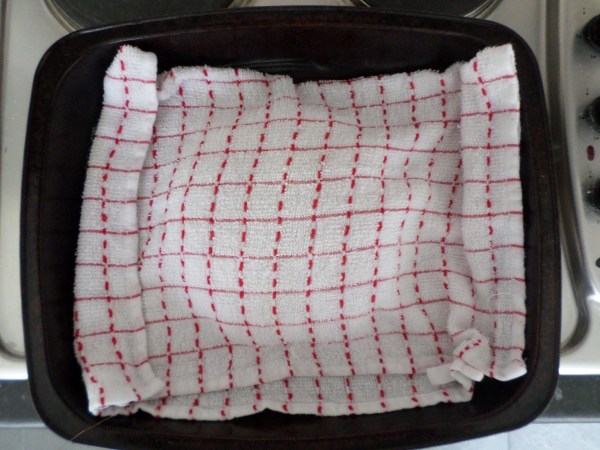
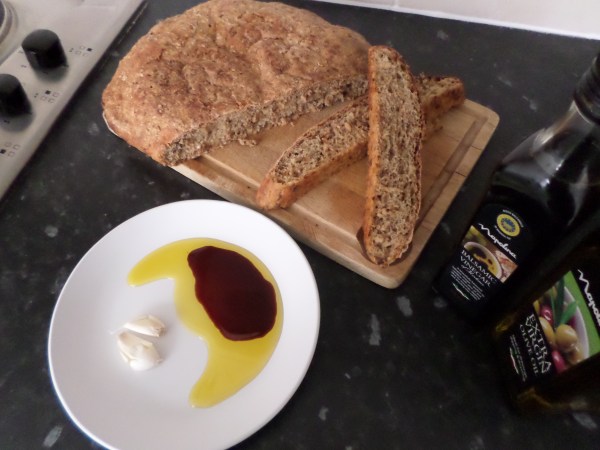
7) Bake in the oven at 200 degrees for about 30 minutes, until brown on top and hollow sounding when tapped.
 bella's kitchen