*NEW POSTS EVERY FRIDAY*
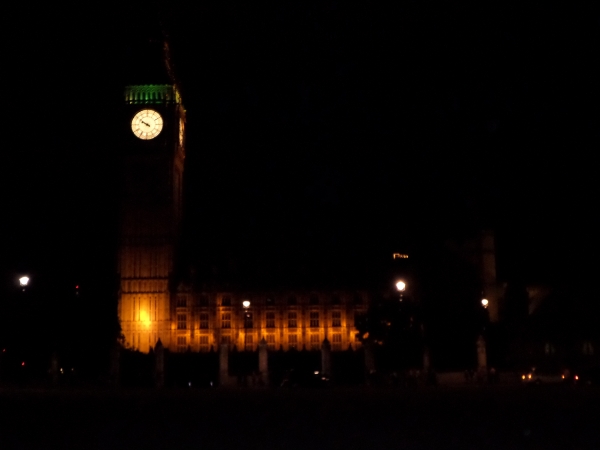
‘The lamps are going out all over Europe; we shall not see them lit again in our lifetime’ – wartime British foreign secretary, Sir Edward Grey, on the eve of war
On the evening of 4th August I had come home from work in London only to grab my camera, a quick bite to eat, and then to go all the way back. Yes, on this evening I went to Westminster to see the lights go out – one of the main commemorations to mark 100 years since Britain’s entry into the war that changed the world.
I finally arrived at Westminster tube station and, as I walked past the Houses of Parliament to reach Westminster Abbey (where the commemorations ceremony was being held), I remembered working in the area only a year ago. My memories of Westminster mainly consist of me rushing to and from the office every day dodging all the tourists with cameras (I must have featured in many photos by the way). On this evening however, I had become one myself, spending a lot of time trying to get my camera to focus in the night time. All this results in the following mediocre photos for your viewing pleasure… or displeasure… sorry.
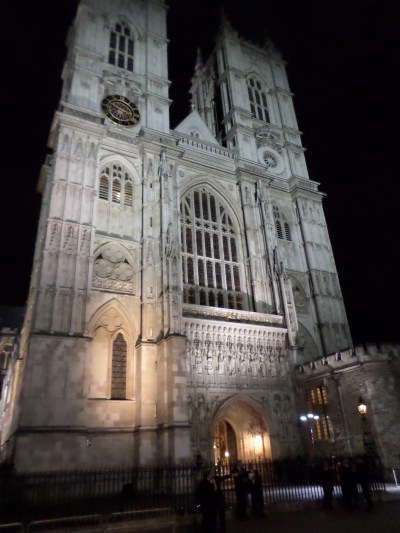
Westminster Abbey – before the people

After
Lights out at Big Ben

Lights going out at Westminster Abbey
I had to leave shortly after this, my whereabouts being completely unknown to my parents as they don’t yet know about this blog, to catch the last train home and go quietly to bed.
A couple of nights later though and I was back again, as my friend was taking me to the source of the mysterious light beam that you may have seen next to the Abbey in some of the pictures above. And what I thought was one powerful light actually turned out to be a group of 49 individual spotlights as part of an art installation called Spectra, created by Japanese artist Ryoji Ikeda, which is located in the gardens behind the Houses of Parliament.

As well as taking the pictures below, I stood with my friend looking up at the lights’ effect on the sky and listening to the calm music also composed by Ikeda, soaking up the atmosphere with my fellow visitors. I saw how this memorial brought people together quietly and happily enjoying the sights and sounds. I saw smiling children being lifted up by their parents to see the tops of the lamps, and couples, friends and families gathering and sitting under the lights. This was not a gloomy atmosphere, but a peacefully respectful one.

So, moving on back to what’s been going on in my (parents’) kitchen, this week as part of my ongoing project teaching myself how to cook and, in particular, learning how Britons fed themselves during the many years of rationing during the First World War, this week I made my family a yummy bread pudding.
Bread pudding is a very old dish which was created as a delicious way of using up stale bread. So this was very popular during the war, a time when it would have been unthinkable to waste leftover food during shortages. As May Byron said in her wartime cook book, ‘[puddings] are indispensable in every decent English household’, and makes clear that ‘just because there is a war on, there is no excuse for letting standards slip’.

War-time posters like these encouraged people not to waste food staples such as bread by making them feel like they could do their part to win the war from home – Photo taken from inside Imperial War Museum’s First World War Galleries
As I mentioned before, my parents don’t yet know about my latest venture, and cooking is certainly no picnic when you have a big family living in a small house with a small kitchen, so it was a tense moment when I told my parents I would be making a bread pudding. But luckily my dad loves bread pudding, and I felt a small sense of achievement when he walked through the kitchen on the way to the living room, saw my progress, and said ‘nice one bel’ in approval.
So here’s what I did…

INGREDIENTS
6 slices of bread diced
Couple handfuls of raisins and dates
2 eggs
500ml full fat milk
150ml cream
1 cup of sugar
1 tbsp cinnamon
Spinkle of nutmeg
2 tbsp vanilla
First of all, I took a small baking dish and placed it in a larger tray which I later filled with boiling water (as this apparently stops the mixture separating). I cut six slices of bread into cubes which I spread into the greased baking dish. On top of this I sprinkled a couple handfuls of raisins and chopped dates, over which I then dusted with some nutmeg. I included the dates because these were often used during wartime rationing in place of raisins, which like most things faced shortages.
Eugenie of Eugenie Kitchen had a really nice idea of soaking the raisins in rum before using in her bread pudding.

I then moved onto making the mixture to pour over. In a pan I warmed the milk and cream, and then added the sugar, cinnamon and vanilla, and mixed until it was a nice creamy colour. The cinnamon and vanilla added a sweet and comforting warmth to the milk, and reminded me of Christmas. While this was heating gently, I beat two eggs in a measuring cup and gradually added the mixture, stopping occasionally to stir.
I then poured the mixture over the bread, leaving for a while to allow the bread to swell nicely as it soaked up the sweet mixture we made. Had I used stale bread, I would have left it for a bit longer, maybe half an hour, to soften before putting it in the oven.
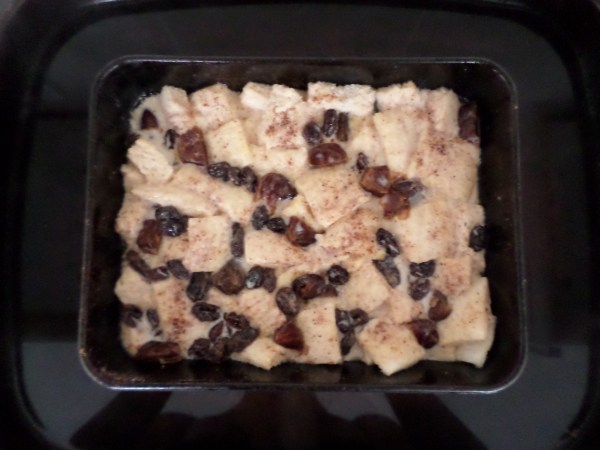
Before
I made sure to press the bread down into the mixture to make sure all was covered before placing into the oven at 160c. It only took half an hour before I noticed the pudding was rising and was nice and golden on top.

After
I had to be very careful taking this out of the oven as the water in the pan was extremely hot – I lifted the baking tray out carefully and put it onto a wooden board to cool for 5 minutes before serving. You can tell it’s ready if you press (with clean hands) gently on top. If it springs back quickly and there is no liquid escaping from the sides then it’s good to go!
It filled the house with a lovely smell of warm and sweet cinnamon and for once my parents couldn’t wait to try something I had made. The pudding was fluffy and light with the softened and sweet fruit on top.
Overall this was very popular with mum and dad, hopefully they’ll let me use their kitchen again next time to make a casserole.
 bella's kitchen
Pingback: BELLA’S HOMEMADE WAR BREAD | bella's kitchen