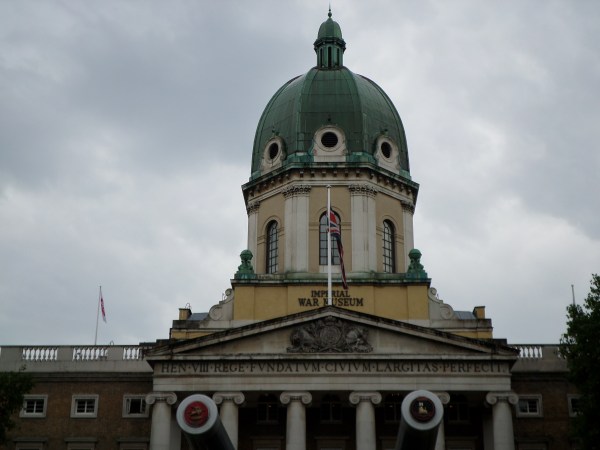
‘We cannot say with what eyes posterity will regard this museum nor what ideas it will rouse in their minds’ – King George V opening the Imperial War Museum on 9th June 1920
On the morning of Saturday 19th July, having slept through my alarm, I scrambled out of bed to rush to the Imperial War Museum in Lambeth, south London, which was reopening to the public after months of refurbishment. It reopens with the new First World War Galleries to coincide with the centenary.
I ended up being lucky enough to be amongst the first into the museum since its closure and one the first members of the public to see the new gallery.
http://ow.ly/i/6hy6p – See this – right at the front!
It reached 10am and the doors were finally open. As we walked through the newly designed atrium of the museum, I thought it must have been a proud moment for all staff, who were waiting for our arrival inside. My parents used to take me to this museum often when I was younger, so when I found out that it was reopening with the First World War Galleries to commemorate the centenary, I knew it was something I couldn’t miss.
But this is something I strongly believe should be embraced by everyone including anyone happening to be visiting the capital. When entering the newly refurbished museum it becomes obvious that a huge amount of effort and money went into creating a place truly fitting of such important world events. The museum is so vast that you could visit many times and with each time learn something new. The fact that all of this is open to you for free makes this the must-see museum in London and, with other branches across the UK, the must-see museum in the country.
As generations move on and there are no longer any surviving veterans of WW1, it becomes even more crucial for not only commemorative organisations like the Imperial War Museum, but for younger generations to continue telling the story of the war that affected the lives of so many millions. This event and the lives lost must never be forgotten.
For this reason, I won’t be writing about what there is to see in the Galleries. You should find out for yourself.

Why I was glad I went early – the queue after I left the Galleries
Two weeks later we find ourselves waking up to a very important day in British history. 100 years ago, on 4th August 1914, Britain went to war. The ‘Great War’ was an event that shaped the history of the world and claimed the lives of millions. The British public are being encouraged to turn out the lights at 11pm tonight, the significance of this being that war was announced at this time on that fateful day in 1914.
But, as a personal commemoration to the struggles faced by many on the Home Front as a direct result of war, I’ve combined my longstanding passion with history with my new and growing enthusiasm for cooking and I have started my blog on the topic of British home cooking during the years of rationing. For this particular post, I came up with a war-time inspired pie recipe. I must re-emphasise that my presence in the kitchen is still new and this was my first time making a pie.
Bella’s War-Time Pie

This is a war-time pie inspired by the trips I’ve made like the one outlined above and the books I have read such as May Byron’s ‘How to Save Cookery Book’ and ‘The Great War Cook Book’, also from May Byron, which I bought at the Imperial War Museum bookshop. I also got a lot of help from Jamie Oliver’s fantastic Food Tube network over on Youtube https://www.youtube.com/user/JamieOliver.
This is a rich beef and mushroom pie, ingredients listed below.
FILLING
1kg braising beef
2g mushrooms
1 red onion
Some chopped parsley
2 Oxo beef stock cubes
Two tablespoons of Lea and Perrins Worcestershire sauce
PASTRY
600g plain flour
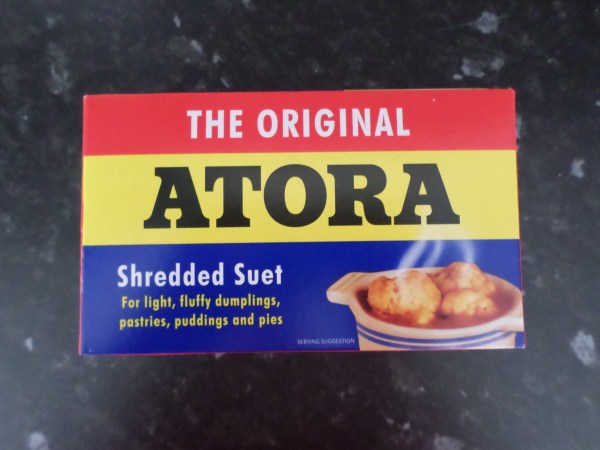
200g Atora shredded beef suet
100g butter
I made two attempts at this because the first one was so awful. It actually put me off my appetite for a week. On the bright side, I did make a note of all the things to improve on for the next attempt. For a start, I got the wrong beef and not enough of it. Adding gravy granules and flour to thicken the stew was a big no-no – adding the flour too late turned it into an unappetising brown colour instead of the rich one I had envisaged before making it and, in my flustered state, I had added two large tablespoons too quickly resulting in clumps of doughy flour in the stew. The whole thing came out looking, and tasting, like one of those Ginsters microwave pies. Yucky.
And don’t even get me started with the pastry. I thought I was fine following Jamie Oliver’s instructions – he makes it look easy as well as delicious – but for the life of me I can’t remember why I interpreted ‘half fat to flour’ as meaning ‘equal fat and flour’. The tough thing with anything baking related is that I’m terrible with numbers and measuring – that’s why I’ve always preferred relaxed and easy recipes which do not require such precise measuring. So with a doughy mixture stuck to my hands, I knew we were in trouble before it even went into the oven. If I found this hard enough then housewives in the war years had a bigger problem: lack of flour during rationing led to potatoes being used to bulk up pastry and this was called potato shortcrust.
Anyway, you learn from experience and that’s why I didn’t let one bad pie ruin another and tried again this week. First of all I went to my local butcher for some braising beef. I diced the meat and seasoned well with the Oxo cubes. I then added these to a very hot frying pan (adding too much oil to the pan on first attempt meant that there was a lot of liquid in the pan and it was impossible to sear the meat and get some good colour on it). In another large saucepan I had the chopped onion and parsley frying in some butter. I added some boiled water to the pan which lifted some of the good burnt bits of the bottom, taking hints from May Byron not to waste anything which can add good flavour to a meal. I added the beef, a pint of water to cover, then added the chopped mushrooms to boil in the mix. Lastly I added two tablespoons of Worcestershire sauce, put the lid on, and reduced to a gentle simmer for two hours.
Now for the pastry. This time I had learnt from my mistakes and sifted 600g flour into a large mixing bowl. To this I added the suet, good old-fashioned Atora (was impressed to find this in my local Co-op as it’s only a small one). Animal fats were used a lot in the early 1900s but in more modern times we have shifted away from this towards healthier vegetable oils. Back then however, any kind of animal fat you could get hold of was extremely valuable because, at a time when food was scarce, fat equalled energy and with more active lifestyles enjoyed it was unlikely to lead to health or weight issues as it would today.
Before

This goes into the oven at 180 for about half an hour, or until nice and golden.
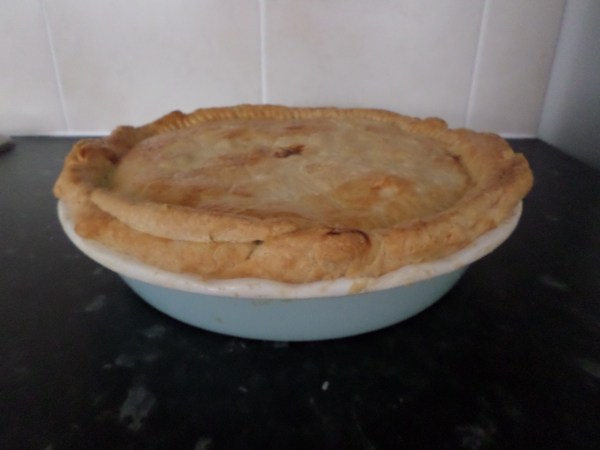 After
After
Overall my second attempt was much better, and my sister actually enjoyed some this time! The beef was lovely and tender but I struggled to get the filling, which was quite watery, to achieve a nice thick and rich consistency. Maybe I added too much water at the start which also drowned out the nice flavours I had attempted to create in the pan. I also think I rolled the pastry too thick which lead to dry crusts on the outside but a soggier pastry on the inside.
With more practice I am sure this recipe would improve although I’m now somewhat keen to stay away from pastry for a while unless it’s the easy shop bought kind!
 bella's kitchen
A person essentially lend a hand to make seriously posts I would state.
That is the first time I frequented your web page
and so far? I surprised with the research you made to create
this actual put up amazing. Excellent job!
Thanks very much!